
You got through the meeting. You answered the messages. You remembered the appointment—eventually. From the outside, the day looked ordinary.
Inside, you spent hours pulling your attention back, reminding yourself what came next, controlling frustration, and trying not to forget something important.
By evening, there is little left for dinner, conversation, or one more decision.
For many people with ADHD, that gap between outward performance and inward effort is familiar. Finishing the work does not tell us what finishing it cost.

The hidden work behind an ordinary day
Executive functions help us organize behavior: begin a task, hold its purpose in mind, manage time, resist distractions, and shift when priorities change.
When these functions are unreliable, a simple responsibility can become a string of repairs. You reread the instructions. Find the missing document. Reconstruct your interrupted thought. Return to the task you accidentally abandoned.
Those repairs take time and can feel exhausting. Research supports an association between ADHD, executive difficulties, and occupational burnout. A study of 171 employees found that difficulties with time management and organization helped explain that relationship. However, an association does not establish what causes burnout in any particular person.
The title of this newsletter needs one qualification: scientists have not established that every ADHD brain literally uses up its energy faster. A review of mental effort research found a small, inconsistent evidence base. The stronger message is that everyday demands can become harder to sustain when effective support and recovery are missing.
When urgency becomes the daily operating system
Consider someone who struggles to begin a report until the deadline becomes immediate. They finally engage, work late, skip dinner, and deliver.
The report is finished. The next morning’s responsibilities remain.
If this pattern repeats, recovery keeps getting postponed. Intense engagement can also make stopping difficult. An interesting project may hold attention long after hunger, stiffness, or bedtime should have prompted a break.
The problem is the repeated mismatch between demands and opportunities to recover.
Some late-diagnosed adults recognize another layer: years spent checking everything repeatedly, working extra hours, or hiding difficulties because they believed they should manage without help. Recognition offers an opportunity to reconsider those habits.
Recognize the strain before the crash
An exhausting afternoon is different from a prolonged pattern of depletion.
Pay attention when starting familiar tasks becomes unusually difficult, mistakes increase, patience shrinks, or ordinary requests feel overwhelming. You may withdraw from people, avoid responsibilities, or spend your downtime worrying about what remains undone.
These signs do not diagnose burnout. They do suggest that your current arrangement deserves a closer look.
“ADHD burnout” is often used to describe sustained exhaustion associated with managing ADHD and life demands. It is not a separate established diagnosis, and fatigue should not automatically be attributed to ADHD.
One clinical study found substantially greater self-reported fatigue among adults with ADHD than among healthy comparison participants. Because it was a cross-sectional study, it could not determine why that fatigue occurred or how it developed.

Reduce the work of managing the work
Start with one recurring source of friction.
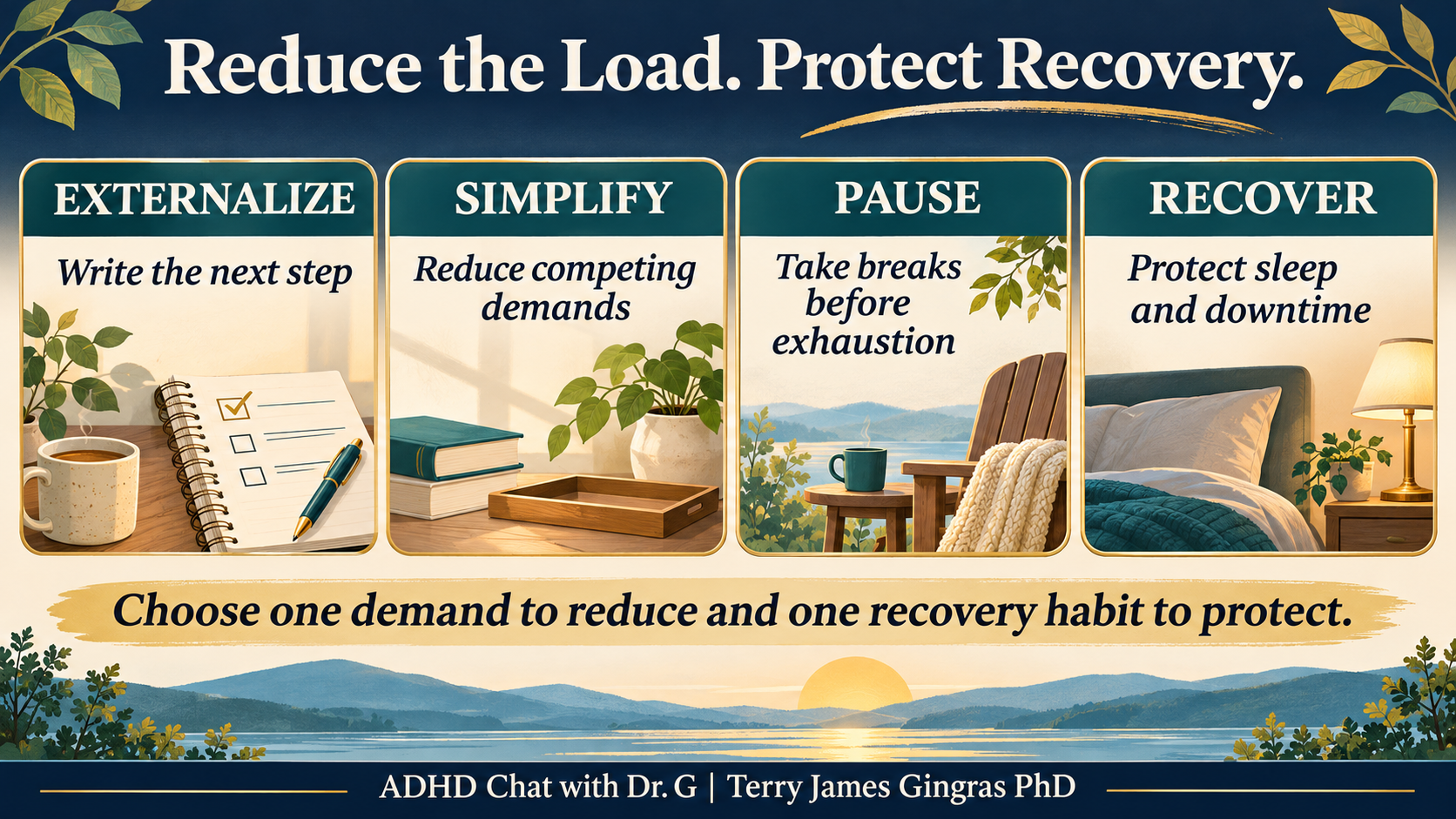
If remembering everything is exhausting, move reminders into one dependable calendar or capture system. If restarting after interruptions is difficult, leave a brief note: “Next: compare the last two estimates.”
If decisions pile up, simplify the repeatable ones. Use a standard grocery list, a regular place for keys, or a short morning checklist.
These supports give you fewer things to reconstruct, remember, and decide.
Also examine the workload itself. Which commitment can be postponed? Which task can be shared? What standard is unnecessarily demanding? A better planning system cannot create enough hours for an impossible schedule.
Make recovery part of the plan
Experiment with brief breaks before you feel depleted. Stand up, drink water, move, or spend a few quiet minutes away from incoming information. Choose a break that leaves you more settled.
Protect sleep with the same seriousness you give appointments. In a preliminary randomized study of adults with ADHD and sleep problems, adding sleep treatment improved fatigue and sleep quality, although it did not produce significantly greater improvement in the primary ADHD symptom outcome. The findings support addressing sleep directly rather than assuming ADHD treatment will resolve every difficulty.
If exhaustion persists, is new, or interferes with daily functioning, discuss it with your clinician. Sleep disorders, depression, medication effects, and other health conditions may require attention.
This week, choose one demand to reduce and one recovery habit to protect.
You do not have to wait until you can no longer function before changing how much functioning costs.
For help building practical ADHD routines, schedule a discovery coaching call at terrygingrasphd.com.
Responses