
When a small frustration becomes a big storm
Your child cannot find a homework assignment. Within minutes, frustration becomes shouting, tears, and “I’m stupid. I can’t do anything.”
Or perhaps you recognize the adult version. A minor criticism lands hard. You snap at your spouse, fire off an email, or spend the evening replaying a conversation.
The event may seem small. The feeling is enormous.
This is emotional dysregulation: difficulty managing the intensity, expression, and duration of an emotional response. For many people with ADHD, it creates problems that reach far beyond unfinished homework or missed appointments.
Why call it the missing symptom?
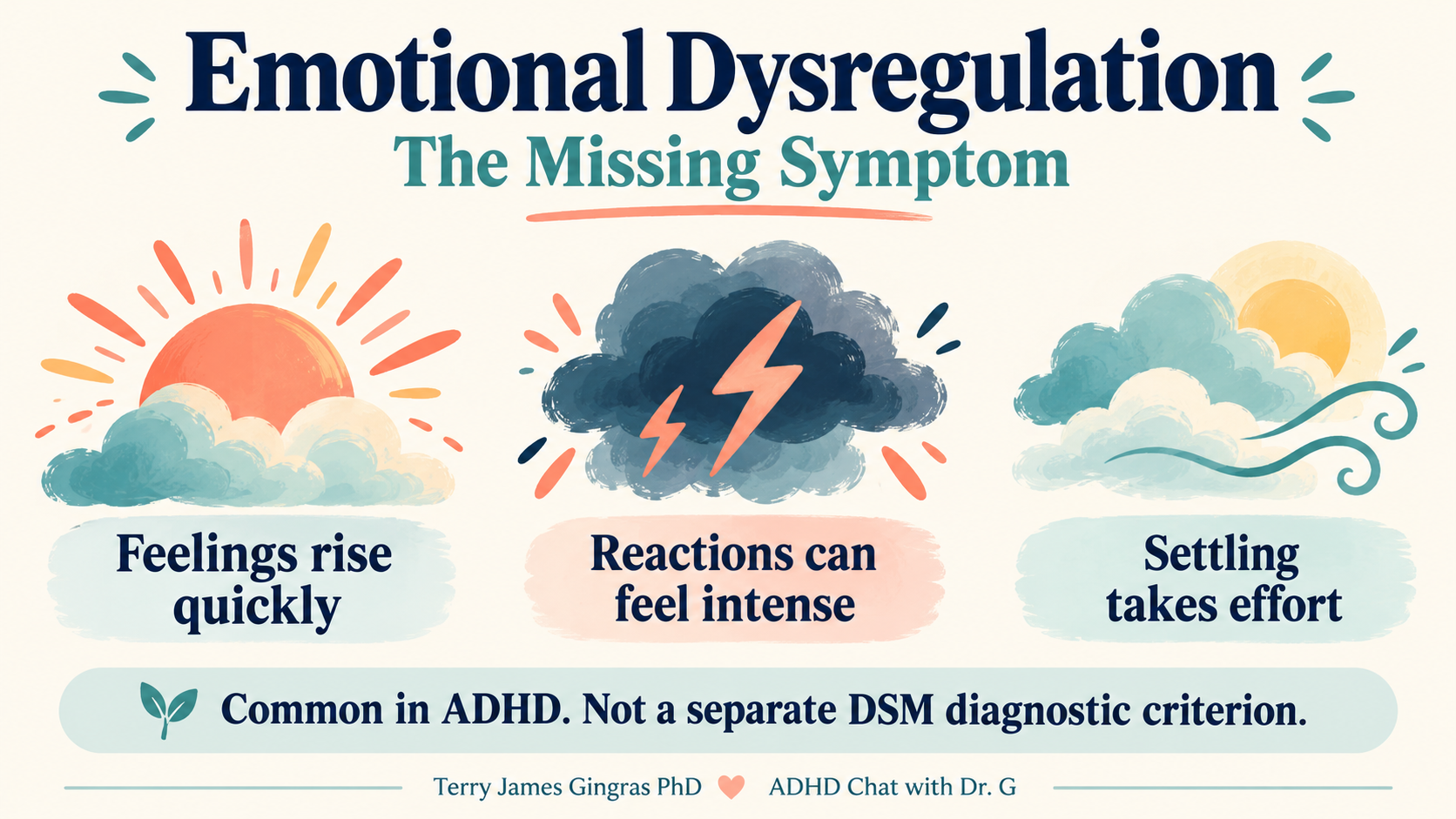
We usually describe ADHD through inattention, hyperactivity, and impulsivity. Yet families often struggle just as much with quick frustration, sharp reactions, and difficulty settling afterward.
Emotional dysregulation is common in ADHD, although it is not a separate DSM diagnostic criterion. It also occurs in other conditions. Not everyone with ADHD experiences it, and emotional outbursts alone do not establish an ADHD diagnosis.
Still, leaving emotions out of the conversation leaves many families with an incomplete understanding of their daily struggles.
A parent sees defiance. A spouse sees oversensitivity. The person with ADHD may see another personal failure.
Recognizing the pattern gives everyone a more useful starting point.
The challenge is creating a pause
Managing emotion requires several abilities: noticing what you feel, stopping an immediate reaction, shifting attention, and keeping the larger situation in mind.
ADHD can make those tasks harder.
A child may know that losing a game is not a catastrophe. An adult may understand that a supervisor’s correction is not a personal rejection. In the moment, that knowledge may be difficult to use.
The feeling arrives, and the reaction follows before there is time to reconsider.
Later comes the regret: “Why did I do that again?”
Understanding this difficulty helps us respond more effectively. Accountability still matters. We can acknowledge the feeling while setting a firm limit on behavior.
“You’re disappointed” and “You cannot throw the controller” belong in the same conversation.
Look beneath the outburst
What happened just before the reaction?
A child who falls apart over homework may already be exhausted from managing the school day. An adult who snaps over an interruption may be struggling to hold a complicated task in mind.
Hunger, poor sleep, noise, transitions, and accumulated frustration can make a difficult moment harder.
Looking for these patterns helps us prepare. A snack before homework, a warning before a transition, or a quieter workspace may reduce avoidable strain.
Keep expectations realistic. Preventing every upset is impossible. Identifying predictable pressure points gives you somewhere to start.
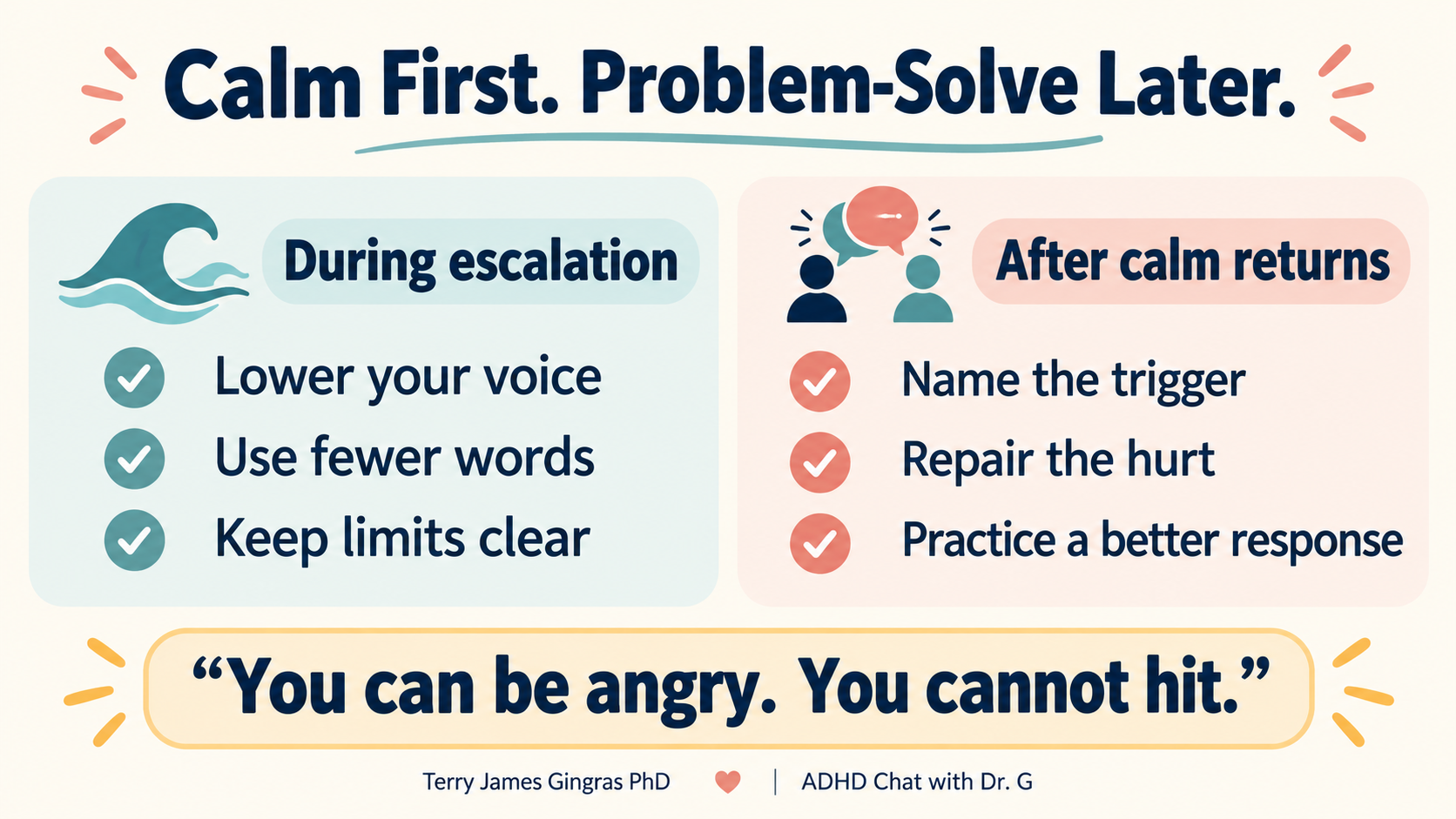
Calm first. Problem-solve later.
During an emotional surge, lengthy explanations can add to the overload. Start with fewer words, a steady voice, and clear boundaries.
Try: “I can see you’re frustrated. You can be angry. You cannot hit.”
Reduce noise and demands where possible. Offer a quiet place or a brief break, with support appropriate to the child’s age. Save the discussion about choices and consequences until everyone can participate.
Parents need a pause, too. If your own voice is rising, take a breath before adding another instruction.
Adults can say: “I’m getting overwhelmed. I need a short break. Let’s talk again in fifteen minutes.”
The return matters. Agree on when to reconnect so the break supports a
better conversation.
Build a pause plan
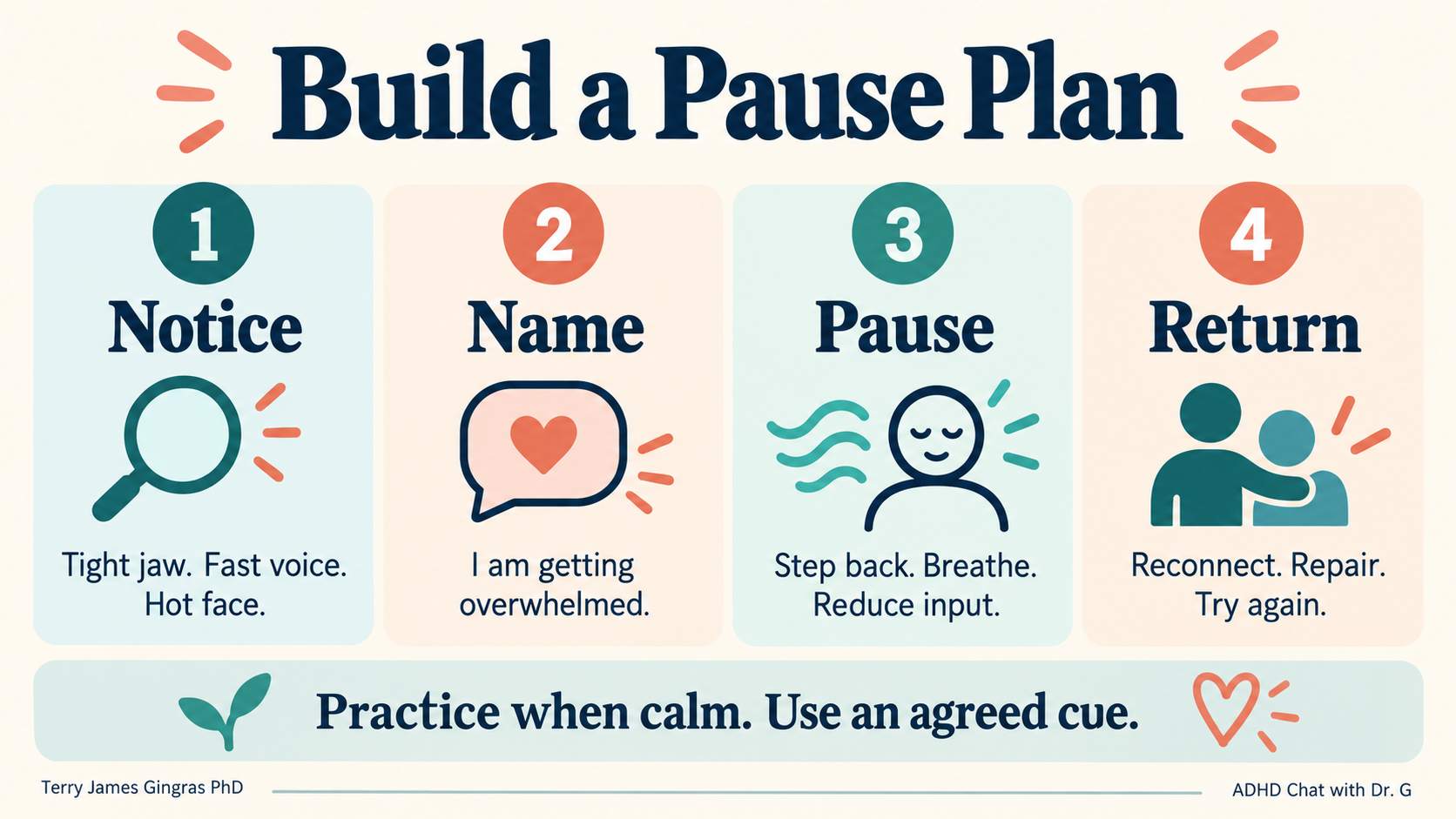
Practice these four steps during a calm moment:
-
Notice. Identify early signals: a tight jaw, hot face, clenched hands, or a faster voice.
-
Name. Use plain language: “I’m frustrated,” or “I’m getting overwhelmed.”
-
Pause. Step back, slow your breathing, or reduce stimulation. Choose a strategy that helps you settle.
-
Return. Address the problem, repair any hurt, and rehearse a better response.
For children, practice together. Use a short cue everyone understands, such as “pause time.”
Adults can model the process by taking responsibility: “I raised my voice. That hurt you. Next time, I will ask for a break sooner.”
Repair teaches something valuable: mistakes can be acknowledged, relationships can recover, and behavior can change.
This week’s exercise
Choose one predictable trigger: homework, transitions, interruptions, or criticism.
Write down the first warning sign, one agreed pause cue, and what you will do next. Rehearse the plan once when everyone is calm.
Praise an earlier pause or a quicker repair. Those are signs of progress.
Frequent, severe, or worsening episodes deserve professional assessment, including attention to sleep, anxiety, depression, and other possible contributors.
The takeaway: Emotional regulation is a skill to support and practice. Understanding the struggle gives families a better place to begin.
For help building practical ADHD strategies for yourself or your family, schedule a discovery coaching call at terrygingrasphd.com.
Terry James Gingras PhD
ADHD Chat with Dr. G
Responses